Mollie Bredehoft
Preservation & Design
Preservation & Design
Three generations deep in this building. “The family ties are what makes this so significant for me.”
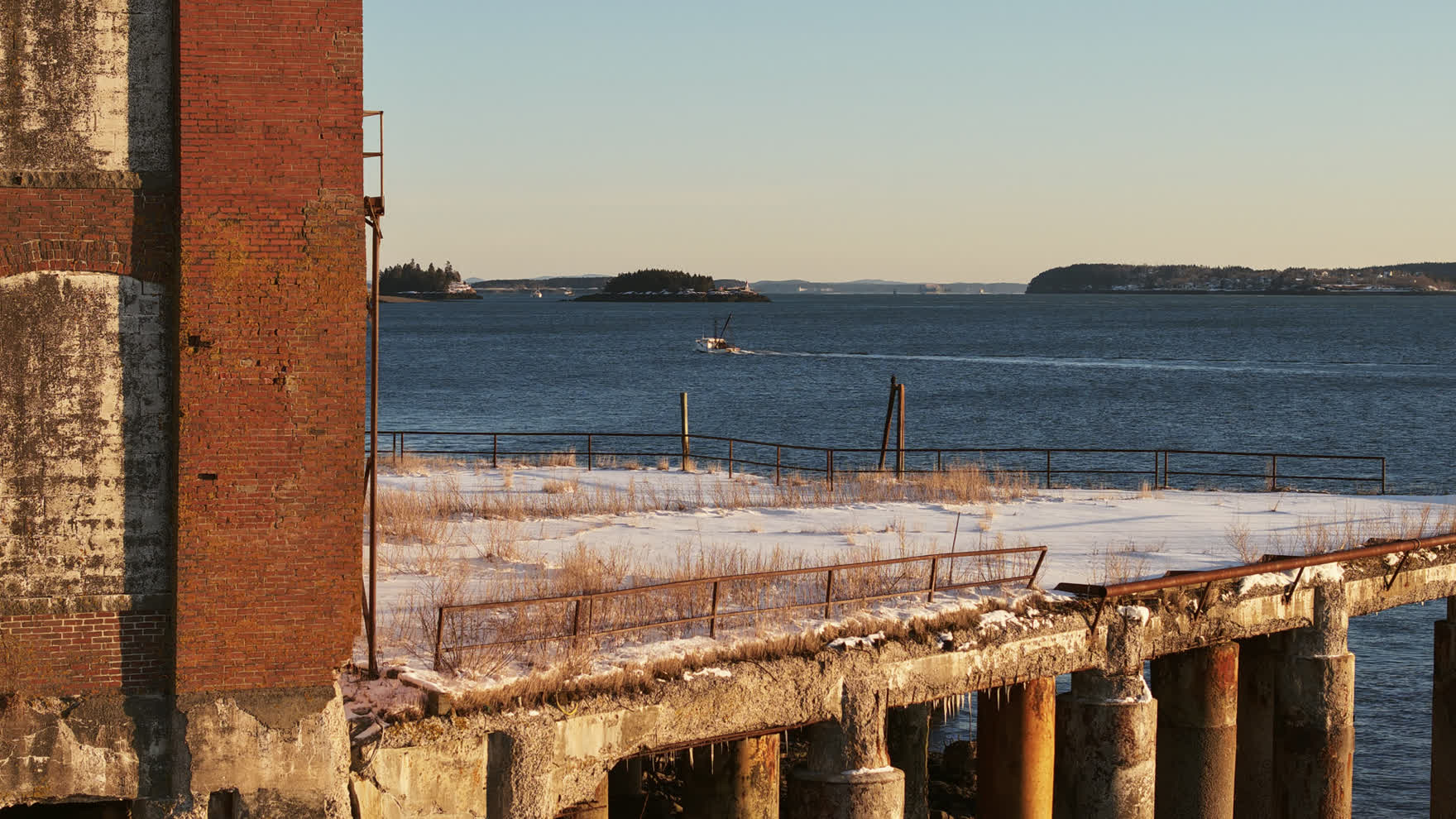
We bought the old sardine can factory. Now we bring it back to work.
American Can LLC is a founder-led preservation and development company formed for one purpose: to bring the historic American Can building, and the working waterfront under it, back to productive life.
Three generations ago, a ten-year-old boy pushed a cart down the rows of this factory floor, collecting finished sardine cans and tallying each worker’s count. His mother worked here too. His daughter now holds the deed. This is a homecoming.
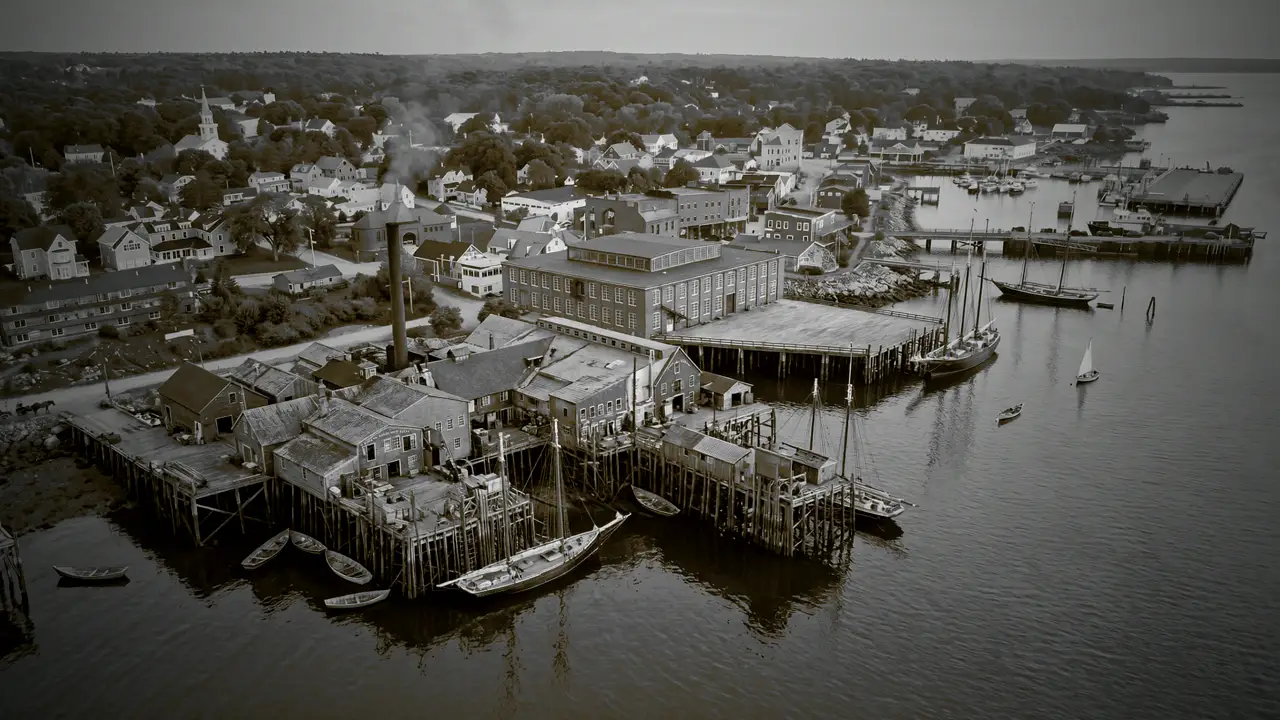
The story opens at the height of the sardine boom, when Eastport worked around the clock. The Seacoast Canning Company raises its can plant right over the water on Sea Street.
A century on, the roof has failed and the windows are boarded, but the brick, the granite sills, and the heavy timber frame are still standing their watch. This is what we bought, exactly as it stands.
The next chapter is still being drawn. The plans will take shape in the open, with Eastport at the table, before anything is announced.
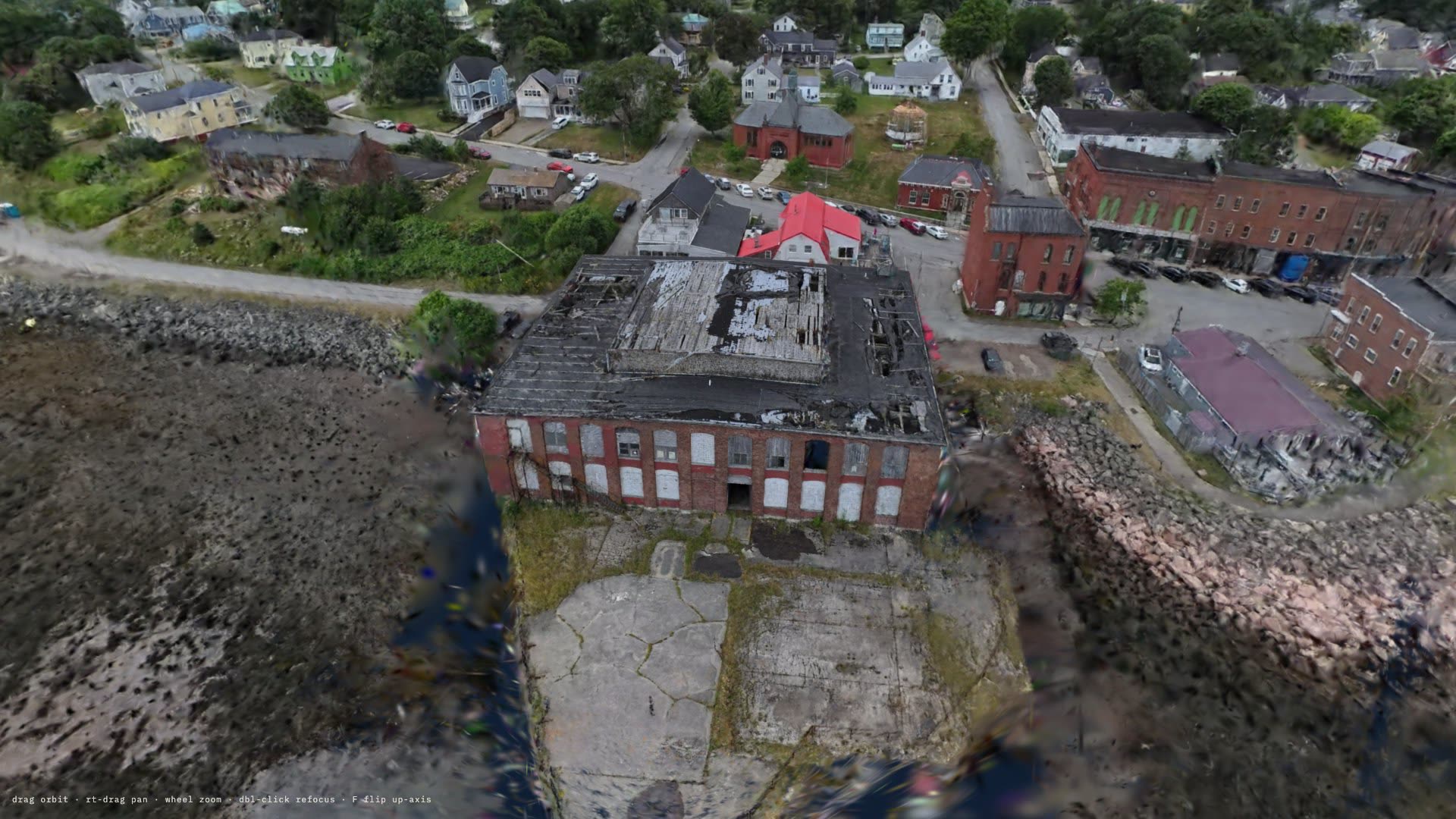
The property, scanned from the air and rebuilt in light. A faithful record of the day the work began.
Down past the seawall to the water side, where the pier deck and the boarded windows stand exactly as the deed found them.
We will scan again as the work proceeds, so the record grows alongside the building. What you see here is the true state of things, kept in the open.
“Almost as valuable as this building is the story that goes along with it.”
Linda Godfrey, Dirigamus LLC, who helped keep it standing for twenty years
Eastport becomes the birthplace of the American sardine industry. Canneries crowd the waterfront; the town runs on tin and tide.
The Seacoast Canning Company incorporates, and quickly grows into the largest name in the sardine business.
The building rises at the boom’s peak. Boston engineer Charles T. Main designs it to work hard, in heavy brick and heavy timber, with a pier carried out over the bay.
As the American Can Company plant, it manufactures the tins for Maine’s canneries and develops the roll-key opening system that becomes the standard worldwide.
The parent company grows so dominant that Washington sues to break up the “Tin Can Trust,” then valued at $88 million. This waterfront plant is part of that empire.
After dark, the clerestory band along the roof glows over the bay while the can-makers work. A ten-year-old boy pushes a cart down these rows, tallying each worker’s cans.
The sardine industry ebbs. The plant shifts to warehouse work, then to aquaculture, with sea urchin and salmon operations under the old timber.
Three local women, together as Dirigamus LLC, buy the building to save it, and keep it standing for the next twenty years.
Maine’s last sardine plant closes. Of the industry that built Eastport, this building is among the last of its kind still standing anywhere.
An outside developer announces a $9 million plan for a hotel, apartments, and retail. It stalls and never happens. The building waits.
Named to Maine Preservation’s Most Endangered Historic Places list.
Listed at over $1 million, then at $150,000. Offers arrive, and the sellers pick the buyers they trust to see it through.
The deed passes on December 5, back into a family that once worked these floors.
American Can LLC takes up the work of stabilizing the exterior, opening the community conversation, and documenting everything as it happens.
The target for open doors. What the building becomes will be shaped in the open, with Eastport.
What we hold ourselves to, in writing, where you can point at it.
The brick, the industrial windows, and the timber columns stay. We keep every defining element we responsibly can.
Where the structure demands renewal, we rebuild honestly, in the building’s industrial character and to SHPO guidance, never in costume.
We’re on site twice a year with publicly scheduled community sessions each visit, and tours of the building whenever it’s safe to give them.
Energy-efficient systems and durable construction, so the building earns its keep for another century.
This company exists solely to steward this property. There is no wider portfolio and no pipeline behind it.
A stabilized landmark, productive floors, and a working waterfront pulling its economic weight for Eastport by 2029.
Preservation & Design
Three generations deep in this building. “The family ties are what makes this so significant for me.”
Development & Community Strategy
Realtor and builder. Clear-eyed about the order of operations: “First, we have to prioritize how to save the building.”
Responsible for the pier, the pilings, and the water side of the property.
Rocky Mountain address, Passamaquoddy Bay blood. We are approachable on purpose. This only works if Eastport tells us what’s best for Eastport.
Proper introductions are coming; for now, the work speaks first.
We will do this work in the open, documented and shared as it happens. Following along helps. So does giving.
Giving channels for direct contributions, preservation partnerships, and in-kind trades & materials are being established now. Until they open, the most useful thing you can send is a note. Tell us what this building means to you, and what it should become.